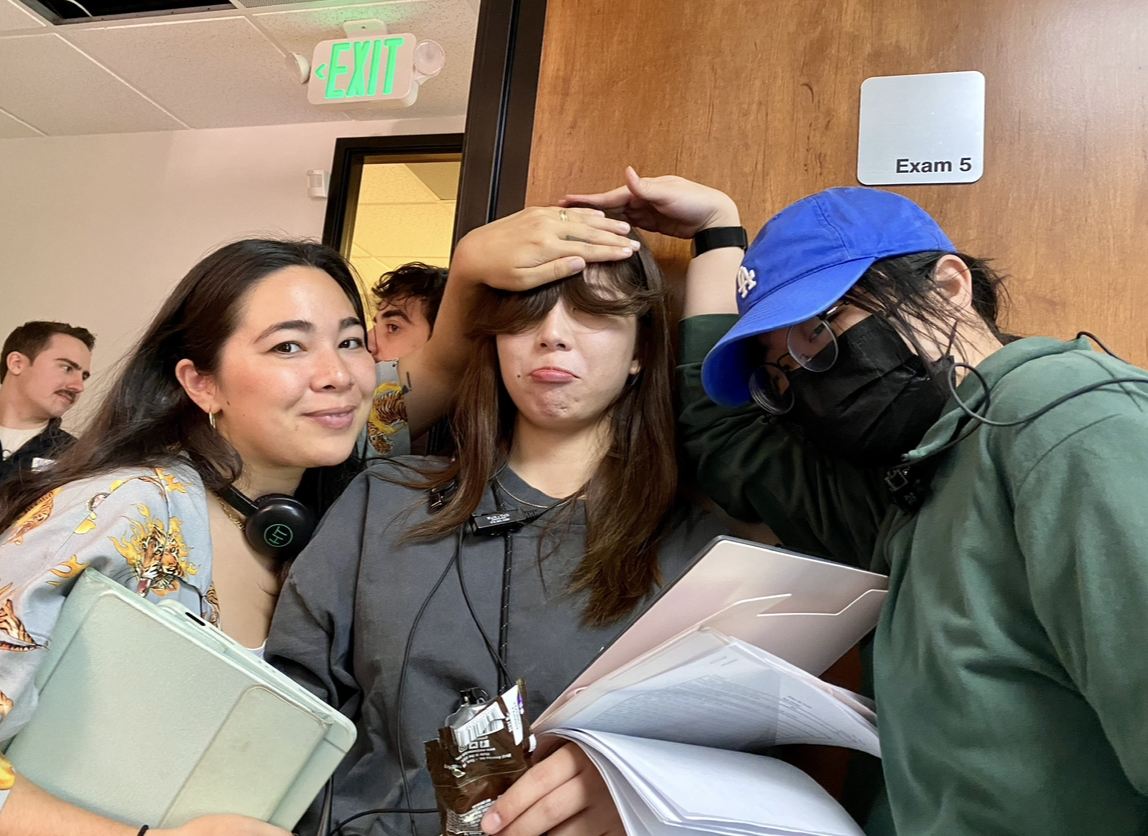
FCBK
Funded by Alfred P. Sloan Foundation & Visionary Justice Story Lab
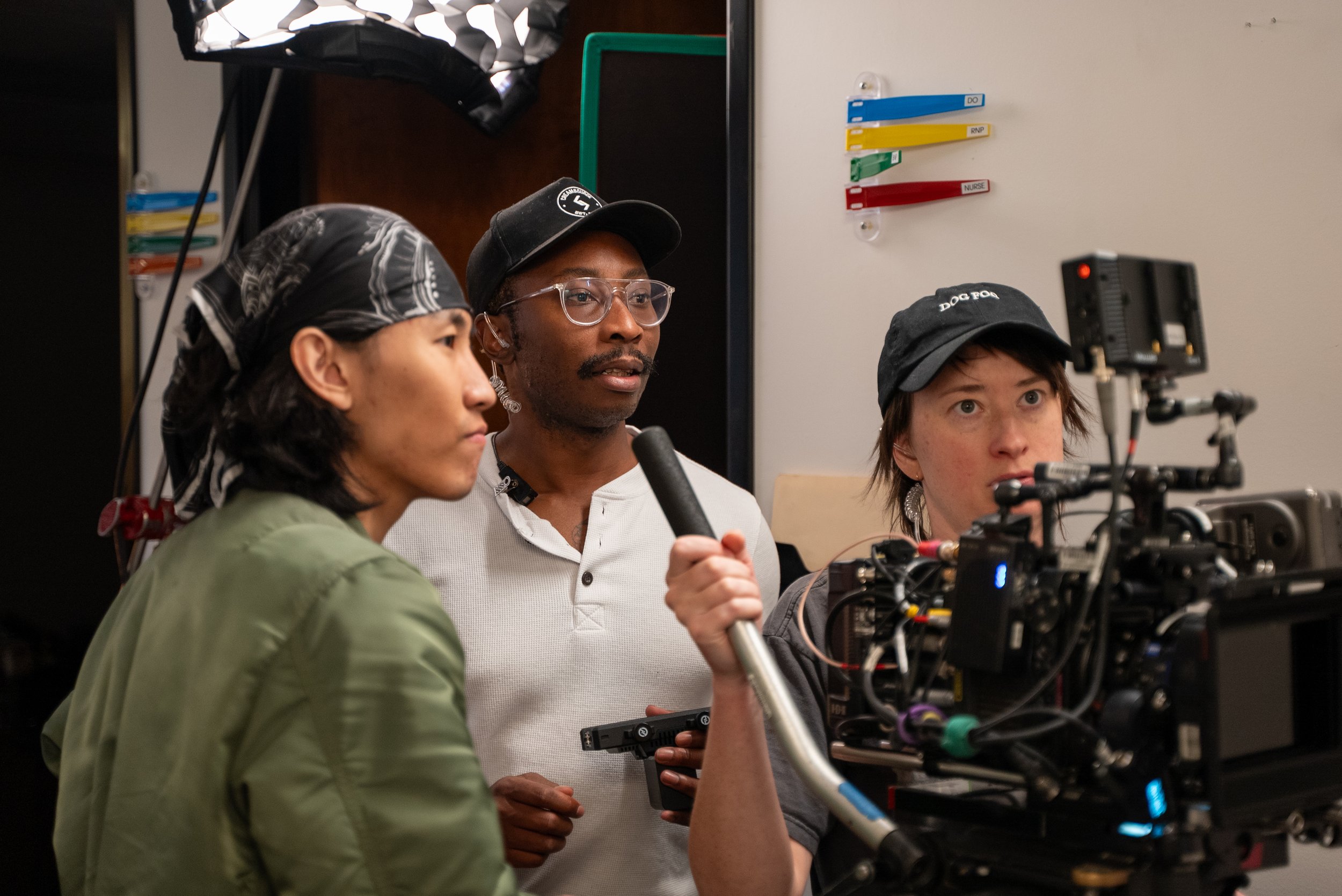
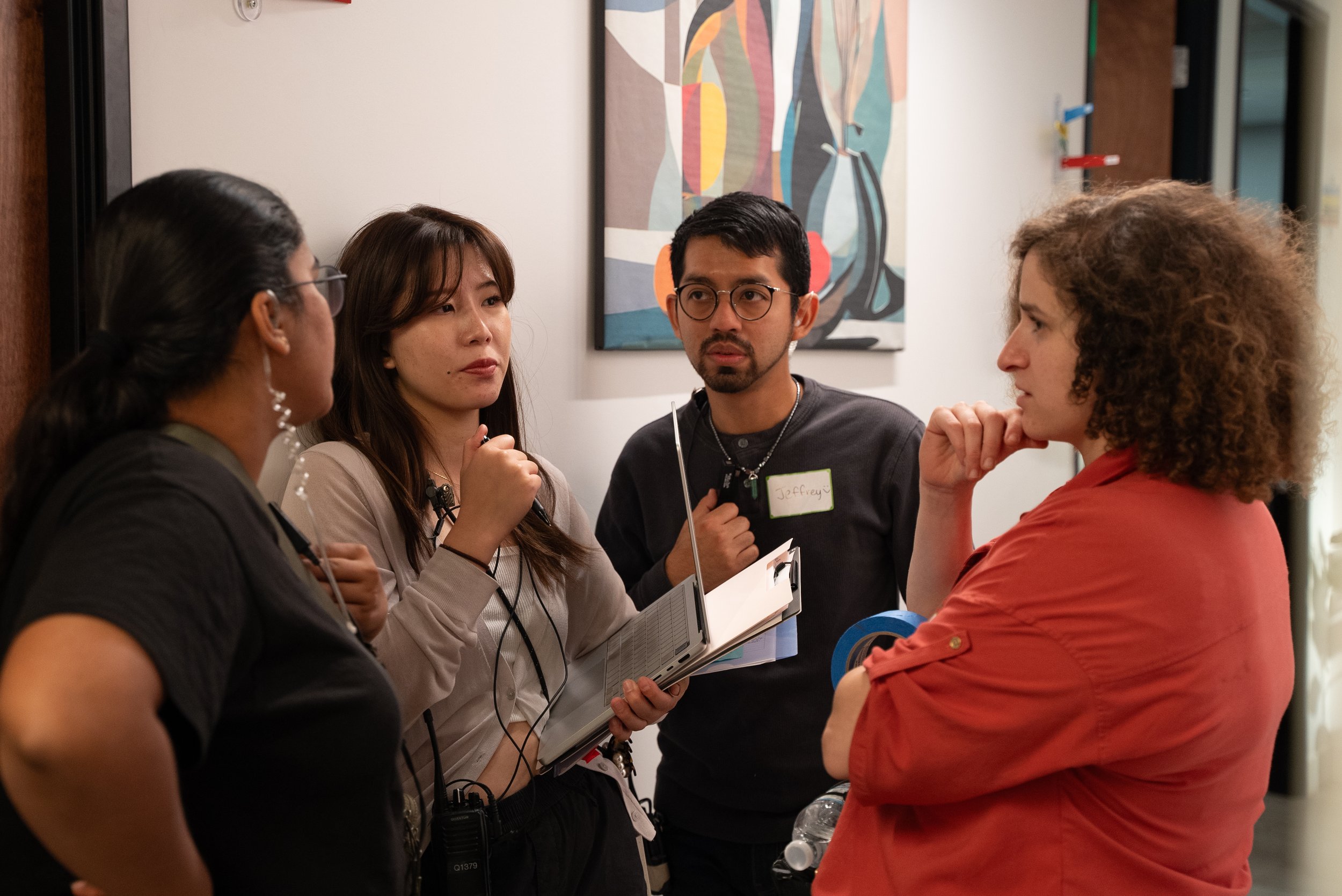
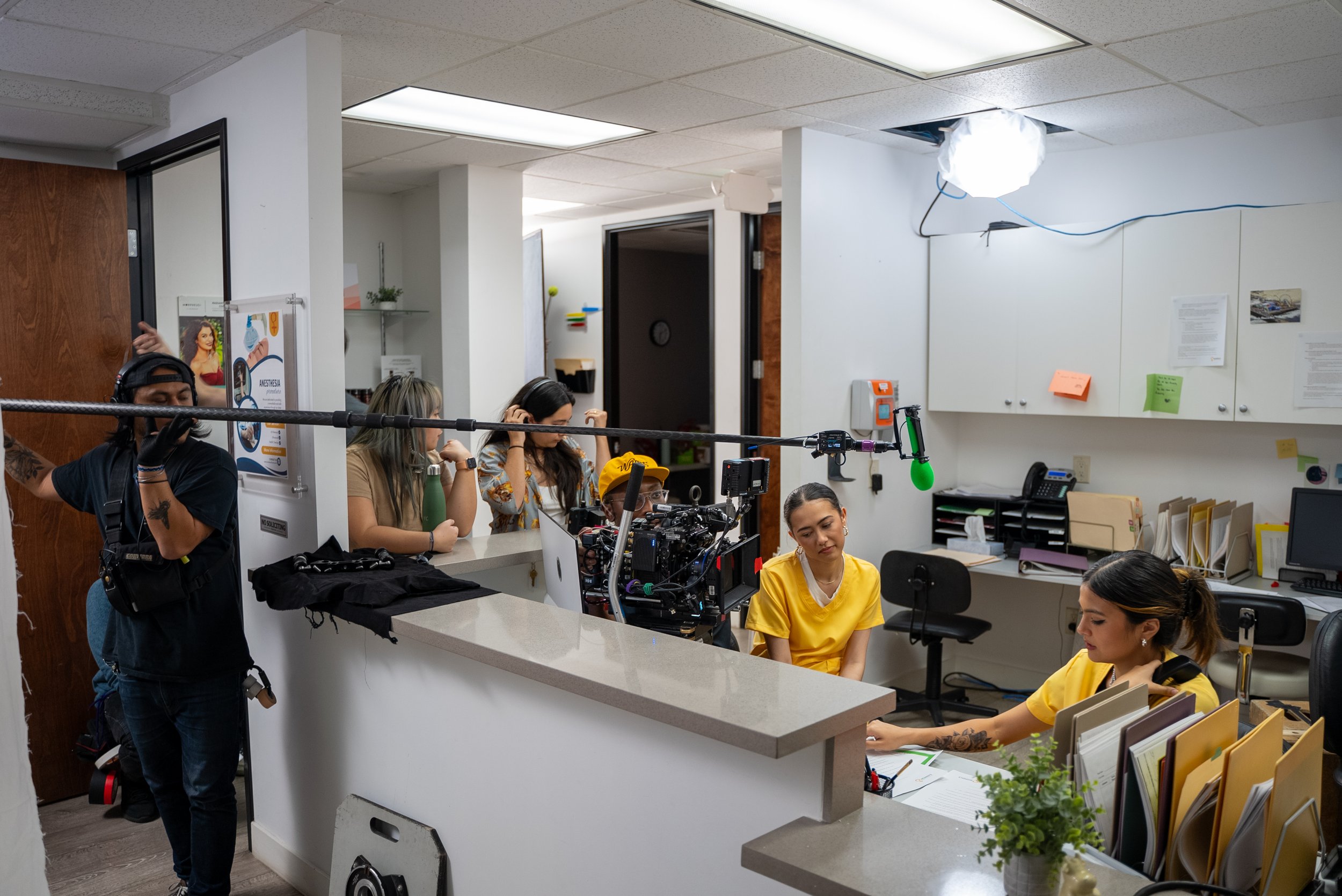
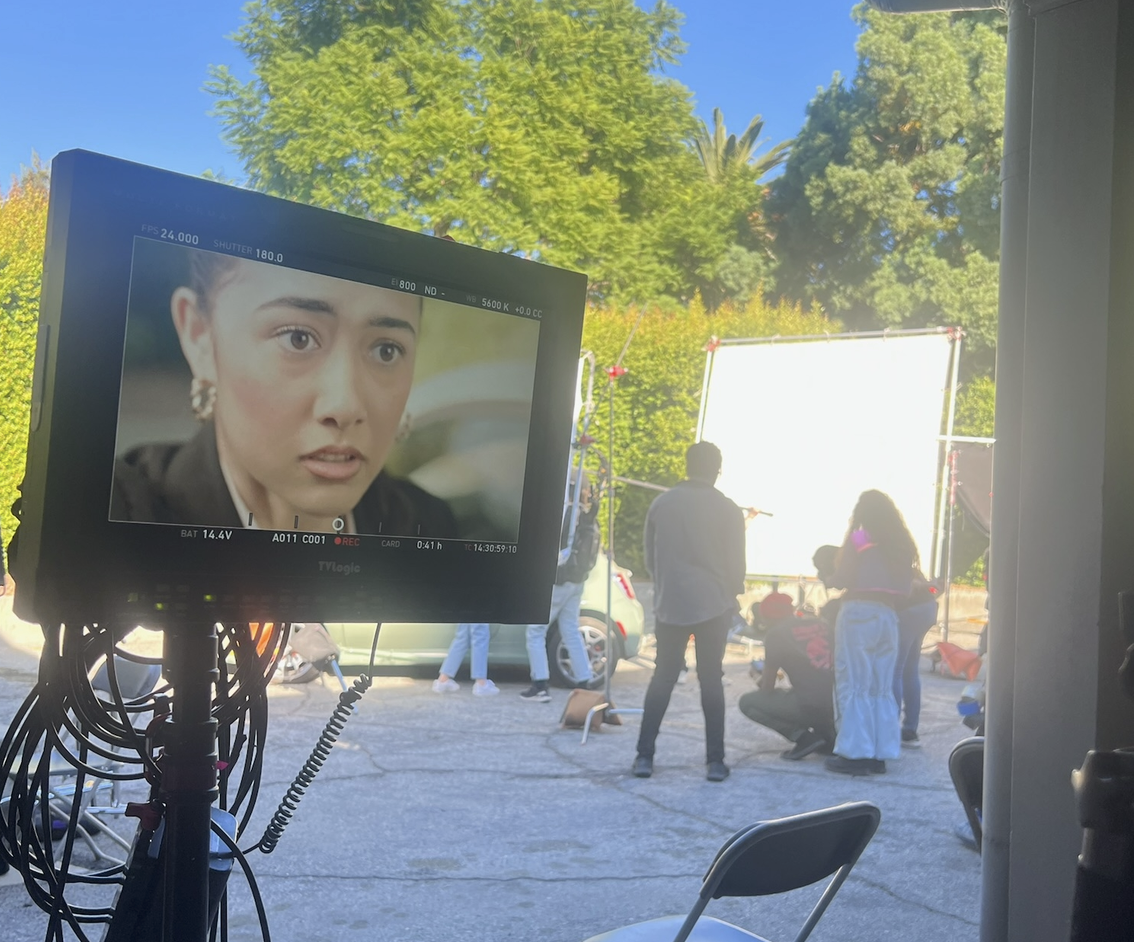
FCBK is a dramedy that follows Tati Reyas, a strong-willed medical assistant working at an abortion clinic that is understaffed and underfunded. With the arrival of new hire, and the responsibility of training this ambitious new employee, Tati becomes insecure of her own background and education. While political tensions mount outside and the clinic starts to feel unsafe, Tati must overcome her own insecurities to keep the new girl from quitting before the end of the day.
Official Selection at 2024 Hawai’i International Film Festival
Official Selection at 2024 AFI Fest
Official Selection at 2025 SeriesFest
Official Selection at 2025 Bentonville Film Festival
Official Selection and Winner of the Best Student Comey at 2026 HollyShorts Comedy
Director’s Statement
FCBK is a dramedy short based on my own time working at a small private abortion clinic in Washington. At the time, I was drifting. Frustrated with my life, trying to figure out what I even wanted to do but knowing I wanted to make a difference. I applied for the job thinking it would be a front desk position, something that would be flexible enough for me to practice film around the 3 day clinic week but still supporting an important issue like reproductive justice. I was shocked when they threw me in scrubs and had me in the procedure room for the interview but I didn’t faint and so they offered me the job.Over the two years I worked there where my world and expectations were subverted every day. There is an expected heaviness to a topic like abortion but what I felt inside the clinic was safety, acceptance and a warm humor. It wasn’t always easy but I think the team, specifically the gallows sense of humor between us medical assistants made each day truly a joy.This colored my world and I’ve seen that it’s a constant in my work as a director in how I approach any topic. We’re in a unique space creatively that hungers for diverse voices yet so often the stories that are asked for feel incredibly limited or reductive. I strive for stories that normalize our experiences and center BIPOC women’s voices. A common theme I find myself embracing is one of consumption and expectation - how can I subvert audience expectations of genre or tropes in a way that lulls them into a false security, then spin it into something new? How do we as creators grapple with material or archetypes that are outdated in a way that reflects our current fears and desires?Telling another abortion story about the perils and struggles to get one or the difficult decision to is not what I’m interested in here. Behind the Curtain is an homage to the work that medical assistants provide to patients and the complex people who come to find themselves in this line of work. It is a glimpse into the mind of someone who often struggles to let people in when they must to support and lift their own community to succeed. It is a celebration of labor and the working class, a nod to those who hold the space for others to come no matter the circumstance.TEAM
-
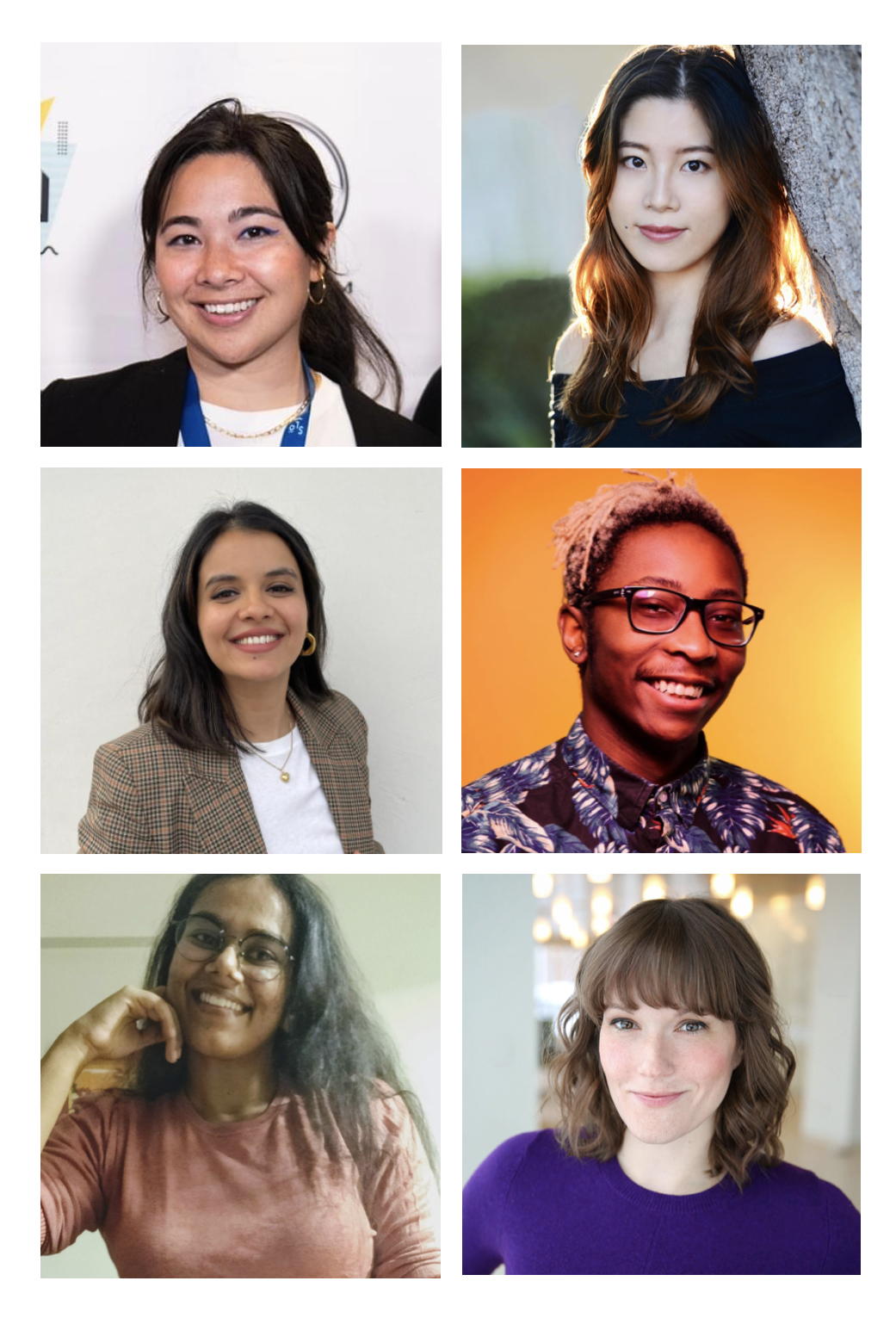
Kanani Koster is a Kanaka Maoli director based in PDX//LAX and a ‘24 American Film Institute Directing Fellow. She has spoken on numerous panels on race, diversity and representation in film as well as serving as a judge for the 2022 Big Sky Documentary Film Festival. Kanani is the 2020 Oregon Made Film Grant winner for the docu-short, Any Oregon Sunday, and a 2020 Portland Arts Museum Re:Imagined Artist recipient. Her latest short film No Spectators Allowed, has won and been nominated for awards such as the Best of the PNW Short Film at the 2022 Bend Film Festival and included in the The Smithsonian National Museum of American Indian’s Fall 2023 showcase. She is the Acquisitions & Impact Manager at Collective Eye Films but spends the off season working on set; be it as a director, producer or AD.
Kanani’s visual style and storytelling is focused on juxtaposing our past and present through reflection and echoes. The stories she strives to tell are not bound by genre but challenge nostalgia and tropes through inclusion and normalization of historically under-represented peoples on screen.
She has worked in the marketing and outreach department for both Seattle International Film Festival and the Northwest Film Center. Kanani was the Doculab Impact Lab Coordinator for A-Doc and Haverford in 2022. As the Acquisitions & Impact Manager for Collective Eye she has implemented campaigns for Personhood: Policing Pregnant Women in America, Food for the Rest of Us and other catalogue films focusing on community driven social change and partnerships with notable organizations like ACLU, Planned Parenthood and NAPW. She has programmed two shorts collections for Collective Eye: To Us the Ashes: Indigenous Shorts and Fractal: Stories Across the Gender Spectrum.
-
Yasuko Yui received both her BA and MA at USC Annenberg School of Journalism, focusing on media and entertainment management. She is currently working towards getting her second Master’s degree at American Film Institute as a Producing fellow. Coming from a multicultural background of being both Japanese and Chinese, Yasuko aims to work on stories that bridge different cultures while targeting universal emotions.
Yasuko’s passion towards storytelling has never changed, and it has grown even more after she had the opportunity to conduct research on portrayals of gender, race/ethnicity, LGBTQ, and disability in mass media. In her work with the Annenberg Inclusion Initiative, Yasuko has examined representation on-screen and behind the camera and contributed to published reports on diversity and inclusion which have enacted positive change across entertainment industries. Since then, Yasuko has spearheaded various projects that elevate API individuals and stories. She also has a soft spot for a slice-of-life family drama, exploring the nature of human connection and subtleties of human existence. Her first short film, GIFT, was selected as a finalist for the 2021 Top Shorts Film Festival and Los Angeles Film Awards.
In her free time, she enjoys playing tennis, binge-watching TV shows, going to the Disney parks, and walking her short-legged dachshunds so that she can shamelessly bask in secondhand fame.
-
Shuchi Dwivedi is a history major and criminal lawyer who is currently a screenwriting fellow (2022-2024) at the American Film Institute in Los Angeles, California. She is a recipient of the prestigious AAUW and AFI scholarship. She was recently selected for the Rickshaw Mentorship Program for South Asian Writers in Hollywood.
In 2022 Dwivedi completed co-writing her first feature film with Binky Mendez, that has been commissioned by Kunal Kapoor Productions. She has previously assisted Hussain and Abbas Dalal in their writers’ room where she worked on adapting an Emmy Award-Winning French comedy-drama series, now airing on Netflix India as CALL MY AGENT BOLLYWOOD EDITION. She also assisted Hussain Dalal in conceptualizing and writing a show, JUGNI for Maddock Productions.
She is interested in telling big stories about gender, sexuality, mental health, crime and the individual, that are raw, authentic and grounded in lived experiences. During her time at the American Film Institute, she aims to write and develop stories for a global audience and find her footing in the international film circuit.
-
Jordan Biagomala was born in Chad, Africa. At a young age he was adopted & traveled the globe with his adoptive family before becoming a resident of Monona, Wisconsin. He is a graduate of Madison Media Institute with an associates in Entertainment Media Business and a Bachelors in Film. Currently he is attending American Film Institute for a MFA in Cinematography and is based in Los Angeles, California. He began his passions with cameras filming skate videos. After entering college and focusing on film Jordan began doing work for a variety of clients working with artists, business, organizations, and pursuing his passion in film by while winning awards for his work. When not behind a camera he enjoys studying art, soccer, books about drifters, & songs about the same.
-
Arushi Mathur is an Architect who completed her Undergrad in 2017 from India’s first and top ranked college, Sir J.J. College of Architecture in Mumbai. She is currently in Los Angeles pursuing a master’s degree in Production Design at American Film Institute Conservatory (2022-23). She is the recipient of the prestigious AFI Scholarship.
Arushi knew of her passion for theatre and films from an early age and started assisting Art Director Amrish Patange, for the pilot or the critically acclaimed show ‘The great Indian murder’, in India.
Over the course of merely a year, Arushi has designed and Art Directed on six short films. She has worked on a Kodak commercial and a music video starring Tasher.
At AFI Arushi is interested in creating her own design style by navigating a blend of genres. She is a strong collaborator and a team leader. Something she has exhibited through all her short films at AFI.
-
Lauren Skelton (she/her) is a Los Angeles-based, Seattle/Chicago-cultivated, Ohio-born multidisciplinary artist who loves hyphens. She holds an MFA in Acting from The Theatre School at DePaul University, where she graduated With Distinction and was the recipient of The Shubert Foundation Scholarship. Lauren has a background in improv, burlesque, and clowning and uses her extensive stage training in the edit bay to help craft performance and find the truth in every frame.
As a filmmaker, actor, and writer, Lauren is committed to telling stories about excluded communities and dismantling the status quo of the tv/film industry from the inside.
Favorite projects include, FILM: Lydia & Lulu (editor), Coat Check (editor/co-producer), Little Free (writer/director), GirlBoss (writer), STAGE: Fefu and Her Friends (Julia), Come Back Little Sheba (Lola), Everybody (Death), Independence (Jo), The Burlesque Hall of Fame Weekender (Las Vegas, NV), and The SheSpot Goes to Camp! at the Seattle Festival of Improv Theater.